A living room refresh does not have to involve new furniture or a major renovation. Small, thoughtful changes can make the space feel brighter, more comfortable, and better suited to your everyday life. By working with what you already own and adding a few affordable details, you can create a noticeable transformation on a modest budget.
Start With a Simple Plan
Before buying anything, take a close look at your living room. Notice what feels outdated, crowded, plain, or uncomfortable. Then decide what you want the room to feel like. Do you want it to be brighter, cozier, more organized, or more colorful?
Choose two or three goals for the refresh. For example:
– Add more color
– Improve the room’s layout
– Make the space feel warmer
– Reduce visual clutter
– Create a more comfortable seating area
A clear plan helps you avoid impulse purchases and keeps your budget focused on changes that will make the biggest difference.
Rearrange the Furniture
One of the easiest ways to refresh a living room is to change the furniture arrangement. This costs nothing and can completely alter the way the room looks and functions.
Try moving the sofa away from the wall, if space allows. Position chairs to encourage conversation, or angle furniture toward a window, fireplace, or media unit. Make sure there are clear paths through the room and enough space to move comfortably.
You can also experiment with different focal points. A television does not always need to be the main feature. A large window, artwork, bookshelf, or attractive coffee table can anchor the room just as effectively.
Take photos of each arrangement before deciding. Looking at the room through your phone’s camera can make it easier to spot what works and what feels unbalanced.
Refresh Soft Furnishings
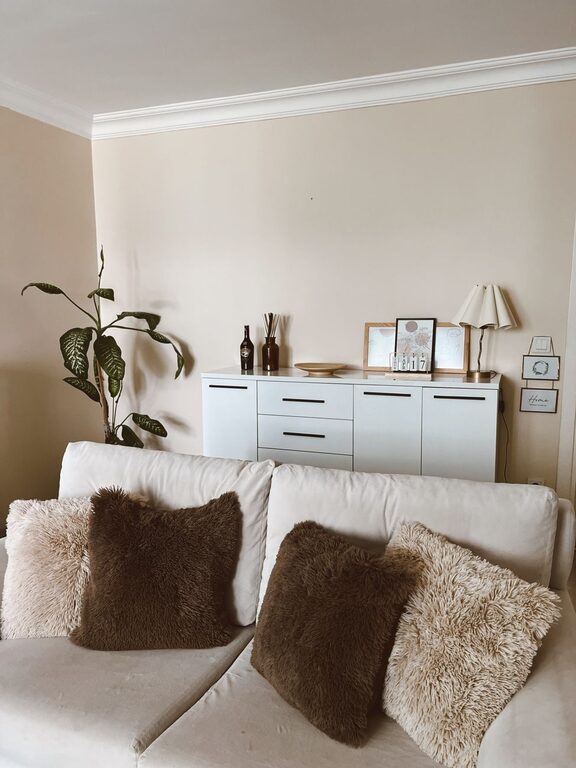
Textiles are an affordable way to introduce color, pattern, and comfort. Instead of replacing a sofa or armchair, update the items around them.
Consider adding or changing:
– Throw pillows
– Blankets
– Curtains
– Area rugs
– Slipcovers
– Poufs or floor cushions
For a coordinated look, repeat one or two colors across the room. For example, a blue pillow, a blue-and-white throw, and a small blue vase can make the space feel thoughtfully styled without looking overly matched.
If your current cushions have removable covers, replace only the covers rather than buying new inserts. You can also sew simple covers from fabric remnants, old curtains, or attractive tablecloths.
Create an Accent Wall
Paint can make a major impact, but you do not need to repaint the entire room. An accent wall behind the sofa or entertainment unit can add depth and personality while keeping costs low.
Choose a color that works with your existing furniture. Soft green, warm beige, muted blue, and terracotta can create a welcoming atmosphere. If you prefer a more subtle change, paint only a small section, such as the wall behind a shelf or a built-in nook.
Before painting, test a small area at different times of day. Natural and artificial light can change how a color looks. Use painter’s tape for clean edges, protect the floor, and take your time with preparation for a smoother finish.
Update the Lighting
Good lighting can make a room feel more inviting without changing its basic design. Use several light sources at different heights instead of relying on one overhead fixture.
Affordable options include:
– A secondhand table lamp
– A floor lamp from a discount store
– Warm-toned LED bulbs
– Battery-powered lights for shelves
– String lights placed discreetly around a bookcase
Replace old lampshades if the bases are still in good condition. A new shade can give a familiar lamp a completely different appearance. You can also move lamps around the room to highlight artwork, reading areas, or decorative displays.
For a cozy evening atmosphere, choose bulbs labeled warm white. Avoid using bulbs with noticeably different tones in the same area, as this can make the room feel uneven.
Shop Your Home
Before visiting a store, look around the rest of your home for items that could be used in the living room. A small side table from a bedroom, a basket from the entryway, or artwork from a hallway may work beautifully in the new arrangement.
Try these ideas:
– Use a dining chair as an occasional accent chair
– Place a decorative bowl on the coffee table
– Move a plant into an empty corner
– Display favorite books on a stack or shelf
– Reuse a tray to organize remotes and small items
Rotating accessories also keeps the room feeling fresh. Store a few pieces for a season, then bring them back later for a simple change.
Add Affordable Artwork
Blank walls can make a living room feel unfinished, but art does not have to be expensive. Create a gallery wall using family photos, postcards, printable designs, or pages from old books and calendars.
For a polished appearance, use frames with a similar color or finish. You can also create a more casual arrangement by mixing different frame styles while keeping the artwork connected by color or theme.
Large artwork can be made from inexpensive materials. Try framing a piece of fabric, mounting wallpaper samples, or creating an abstract design with leftover paint. Even a simple canvas with a few broad brushstrokes can add personality to the room.
Bring in Plants and Natural Details
Plants add color, texture, and life to a living room. If large plants are outside your budget, start with smaller varieties and place them on shelves, tables, or stands.
Low-maintenance choices can be especially useful for busy households. Use attractive baskets or simple ceramic pots to make inexpensive plants look more finished. Grouping several plants at different heights creates a fuller display.
You can also add natural materials through woven baskets, wooden trays, cork accessories, or a small branch arrangement. These details bring warmth to rooms with lots of hard surfaces.
Improve Storage and Reduce Clutter
A tidy room often feels more refreshed than a room filled with new decorations. Identify items that do not belong in the living room and return them to their proper places. Then find simple ways to contain the items you use every day.
Use baskets for blankets and toys, trays for remote controls, and boxes for chargers or small electronics. If your coffee table is crowded, keep only a few useful or attractive items on it.
Open shelving should not be packed tightly. Leave some empty space between books and accessories so the room feels calm rather than cluttered.
Give Old Furniture a New Purpose
Before replacing worn furniture, consider whether it can be improved. A wooden side table may look new after light sanding and a fresh coat of paint or stain. New drawer pulls can update a small cabinet, while adhesive wallpaper can add interest to the inside of a shelf.
Always clean and prepare surfaces carefully before painting. Choose products suitable for the material and allow enough drying time between coats. Even small repairs, such as tightening loose legs or replacing worn feet, can make furniture feel more polished.
Finish With Small Personal Touches
The best living rooms feel personal rather than copied from a showroom. Display items that reflect your interests, memories, and everyday routines. A favorite collection, travel photo, handmade object, or meaningful book can make the space feel more like home.
Make changes gradually instead of trying to complete everything at once. Start with rearranging, decluttering, and using what you already have. Then add one or two affordable updates, such as new pillow covers, a lamp, or a piece of artwork.
With a little creativity and planning, you can refresh your living room on a budget while creating a space that feels comfortable, useful, and uniquely yours.