A clear kitchen counter can make the entire room feel cleaner, larger, and easier to use. When appliances, mail, dishes, and food containers pile up, even a spacious kitchen can feel cramped. The good news is that you do not need a complete remodel to create a more organized space. A few thoughtful changes and simple daily habits can keep your counters tidy.
Start With a Countertop Reset
Before deciding where items should go, remove everything from the counters. Place the items on a nearby table, island, or clean section of the floor. This gives you a clear view of how much you own and how much space you have.
Clean the empty counters with a suitable surface cleaner, then sort the items into four groups:
– Use every day
– Use occasionally
– Belong somewhere else
– No longer needed
Be honest about what deserves countertop space. An item that is used once a month probably does not need to remain out all the time. Put seasonal tools, duplicate utensils, and rarely used appliances in cabinets, drawers, or a pantry.
This reset also helps you notice patterns. If the same items always gather in one corner, that area may need a better storage solution.
Keep Only Daily Essentials Within Reach
The most effective way to reduce visual clutter is to limit the number of items that stay on the counter. Keep only the tools and appliances you use regularly.
Daily essentials might include:
– A coffee maker or electric kettle
– A knife block
– A fruit bowl
– A cutting board
– A container for cooking utensils
Even these items should have a defined location. Grouping similar items together creates a more orderly look and makes the counter easier to clean.
If you use a small appliance only occasionally, store it in a cabinet. For appliances that are heavy or awkward to move, consider a lower shelf or a rolling cart nearby. Convenience matters, but the goal is to make storage easy enough that you will use it consistently.
Create a Home for Every Item
Clutter often appears when objects do not have a clear place to return to. Assign a specific home to everything that commonly lands on the counter, including keys, grocery bags, paperwork, and reusable water bottles.
Use storage that matches your routine:
– Add a tray near the entrance for keys and small items.
– Place a file holder in a nearby office area for mail.
– Keep reusable bags in a basket or cabinet.
– Store water bottles together in a lower cupboard.
– Use a small bowl for loose items that need to be sorted later.
A designated home makes tidying faster because you do not have to decide where something belongs each time. If an item repeatedly ends up on the counter, its current storage location may be inconvenient. Move it closer to where you use it.
Make Better Use of Cabinets and Drawers
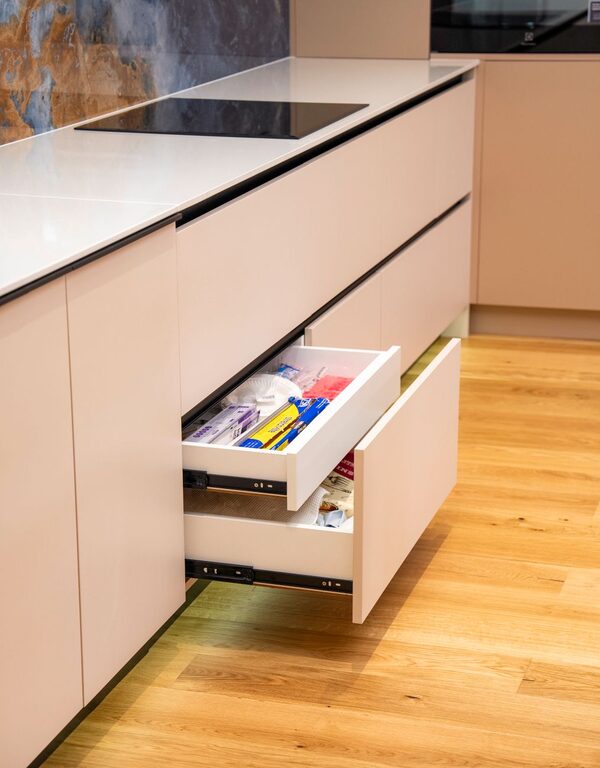
A cluttered counter may be a sign that the storage inside your cabinets is not working well. Use organizers to make hidden storage more practical.
Helpful options include:
– Shelf risers for plates, mugs, and small bowls
– Drawer dividers for utensils
– Pullout baskets for pantry items
– Vertical racks for baking sheets and cutting boards
– Door-mounted racks for wraps, spices, or cleaning supplies
– Clear bins for small food packages
Avoid filling cabinets so tightly that putting items away becomes difficult. Leave enough room to remove and return items without moving several other objects first.
Store frequently used items between waist and eye level. Place heavier appliances on lower shelves, and reserve higher spaces for items you use less often.
Use Vertical Space
When counter space is limited, look upward. Vertical storage can free up valuable work areas without requiring a large renovation.
Consider adding:
– A wall-mounted rail for utensils
– Hooks beneath cabinets for mugs
– A magnetic strip for suitable kitchen tools
– Floating shelves for attractive, frequently used items
– A pegboard for flexible storage
– An over-the-sink shelf for sponges or small tools
Keep vertical storage focused and simple. Too many items hanging on a wall can look just as crowded as a busy counter. Choose a few useful pieces and arrange them with some open space between them.
Control Paper and Charging Clutter
Mail, receipts, school papers, and charging cables can quickly take over a kitchen counter. Create a small command area away from food preparation spaces.
A wall-mounted organizer or narrow shelf can hold:
– Incoming mail
– Papers that need attention
– Coupons and shopping lists
– Pens and notepads
– Charging devices
Set a regular time to sort the contents. Recycle unwanted paper, file important documents, and return items to their proper rooms. If possible, charge phones and other devices in a bedroom, office, or dedicated charging station instead of near the kitchen sink.
Organize the Sink Area
The area around the sink often becomes a collection point for soap, brushes, sponges, and wet towels. Keep this space functional by limiting the number of items on display.
Try these ideas:
– Use a small tray to group soap and lotion.
– Store extra sponges and brushes under the sink.
– Choose a holder that allows sponges to dry properly.
– Install a hook or rail for dish towels.
– Keep cleaning products in a bin instead of scattered around the sink.
Check this area regularly for empty containers, worn sponges, and products you no longer use. A quick cleanup can make the entire kitchen look more polished.
Create a Drop Zone for Groceries
Grocery shopping can create temporary clutter, especially when bags and packages remain on the counter for hours. Choose a nearby area for unpacking groceries and make the process more efficient.
Sort food into categories as you unload:
– Pantry items
– Refrigerator items
– Freezer items
– Produce
– Household supplies
Put each group away immediately when possible. Use baskets or bins to keep similar pantry items together, and avoid placing new items in front of older ones. This makes it easier to see what you have and helps keep the counters clear after shopping.
Follow the One Minute Rule
Many small tasks take less than a minute but become frustrating when they accumulate. Put away a package, return a utensil, or wipe a small spill as soon as you notice it.
You can also use a short evening reset. Before going to bed:
- Put away appliances and ingredients.
- Return dishes to the sink or dishwasher.
- Sort mail and loose items.
- Wipe the counters.
- Check the sink area.
- Sweep up visible crumbs.
This routine does not need to take more than five to ten minutes. Starting the day with a clear counter makes cooking and cleaning feel easier.
Use the Container Limit
Containers can help with organization, but too many baskets and bins can add clutter. Set a limit for each category. For example, use one basket for snacks, one bin for baking supplies, or one drawer for food storage lids.
When the container is full, remove unused or duplicate items before adding anything new. This simple rule keeps storage under control and prevents cabinets from becoming crowded.
Rethink Countertop Decor
Decorative items can make a kitchen feel welcoming, but too many can reduce useful workspace. Choose a few pieces that serve a purpose, such as a bowl of fresh fruit, a small plant, or an attractive cutting board.
Keep decor away from areas where you prepare food or place hot cookware. Leave enough open space to chop, mix, and serve comfortably. A tidy kitchen usually looks better with a few carefully chosen items than with many small decorations.
Make Clutter Free Counters a Habit
A clutter-free kitchen does not require perfection. It depends on making storage convenient and repeating a few simple habits. Start by removing items you do not use, giving every essential a home, and creating a brief daily reset.
Once the system is in place, pay attention to what continues to collect on the counter. Adjust the storage location, remove duplicates, or create a small drop zone for that category. With regular maintenance, your kitchen counters can stay clear, practical, and ready for whatever you plan to cook.